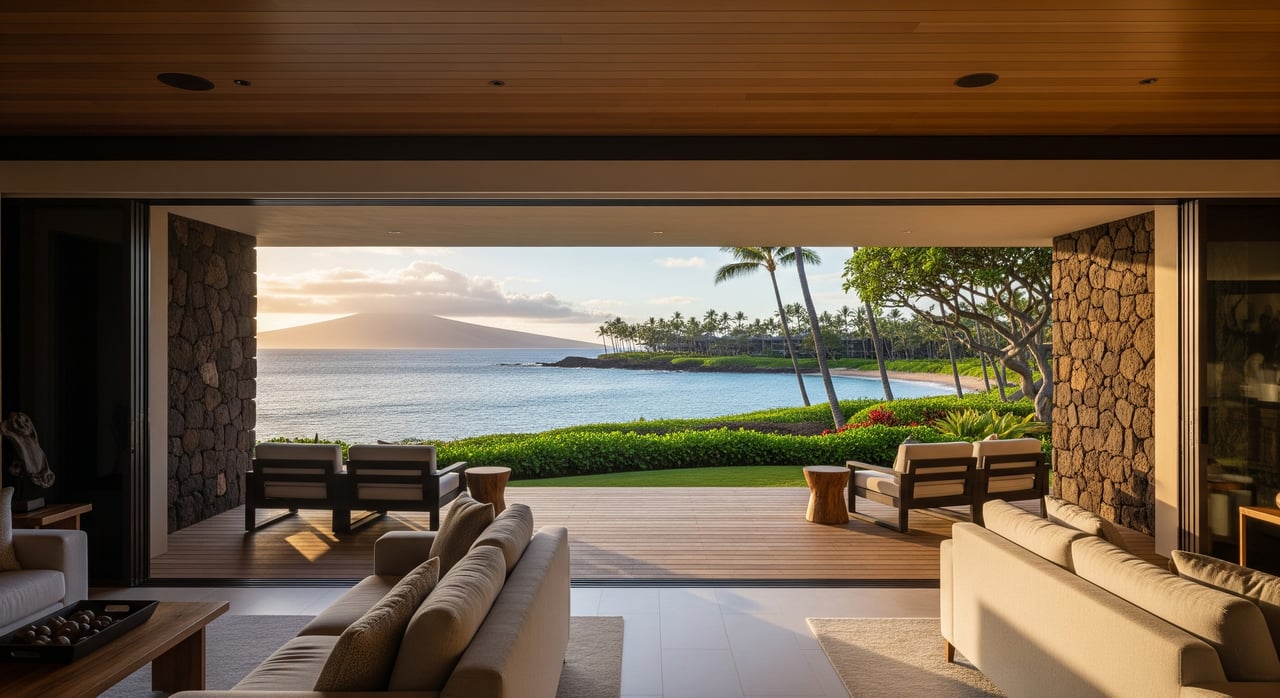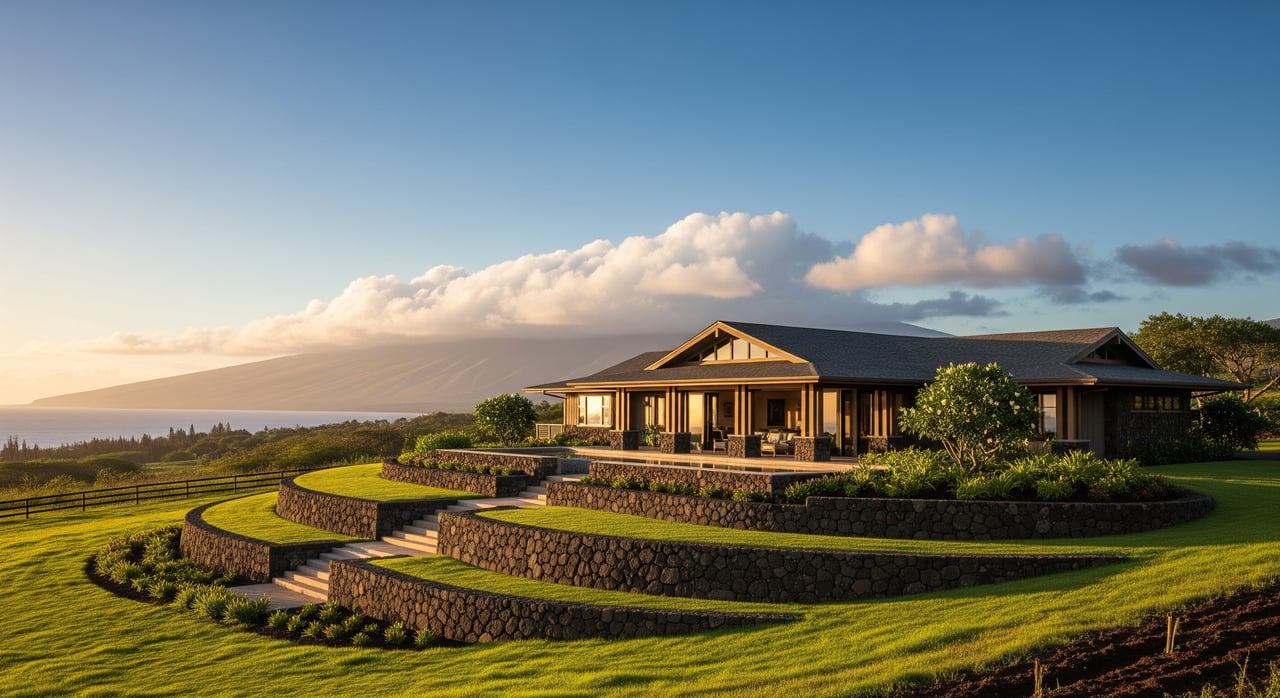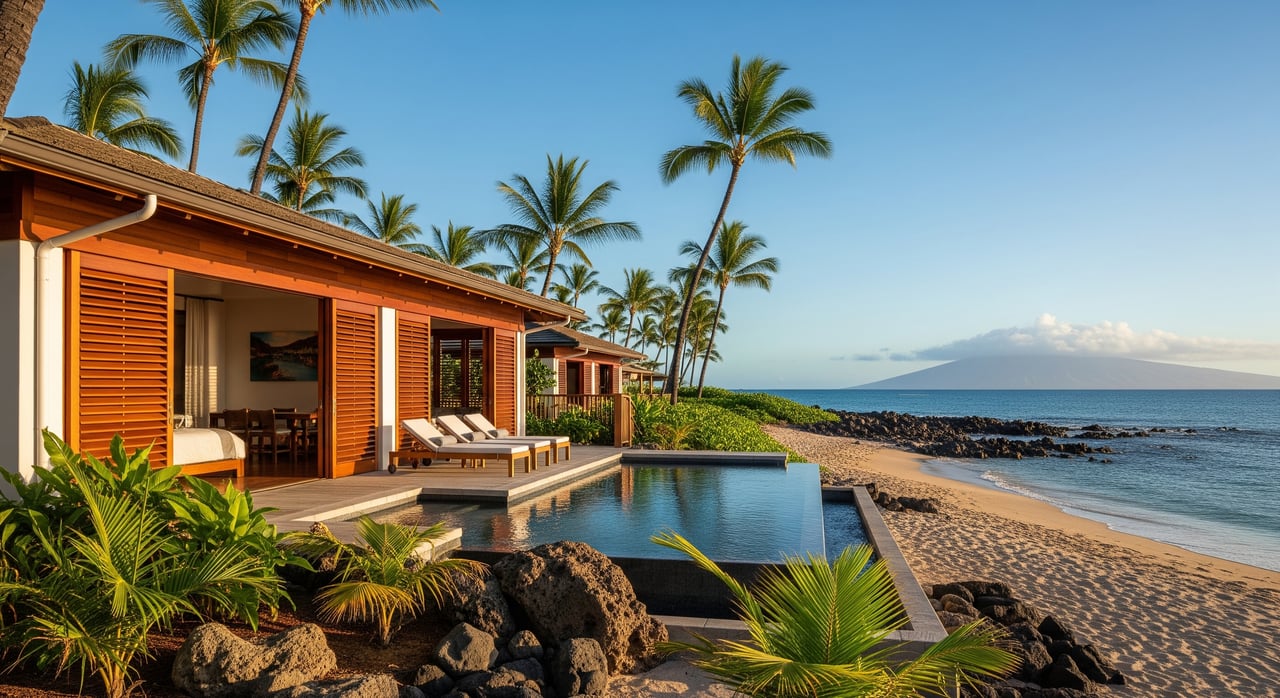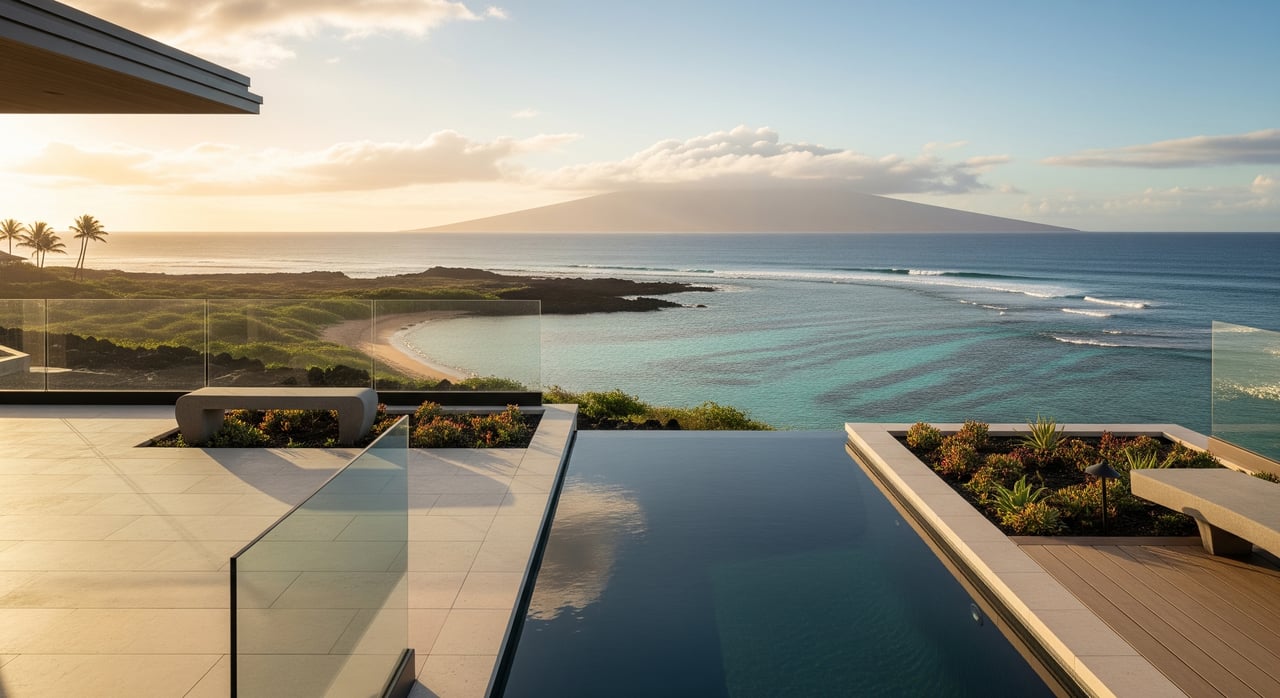
Is that “ocean view” the one you think you are buying? In Makena, a few degrees of orientation and a small change in elevation can turn a postcard sunset into glare or an island silhouette into a roofline. If you care about design, comfort, and long‑term value, you want a view that looks incredible and lasts. This guide shows you how to read Makena’s view corridors like an architect so you can judge quality and permanence with confidence. Let’s dive in.
Start with place: Makena’s view DNA
Makena sits on South Maui with most coastlines facing south to southwest. Many properties look toward the Pacific with Molokini to the west or northwest and Kahoʻolawe to the southwest. That means sunsets, shifting color on the water, and broad ocean horizons are common, but details vary lot by lot.
Trade winds typically arrive from the northeast. Local terrain creates pockets of calm and pockets of stronger wind, which influence where you will actually enjoy sitting to take in the view. Before you fall in love with a photo, plan to verify the exact azimuth of your sightlines on site.
Orientation and sun: get the azimuth right
Record precise sightlines
Stand in the main living room, primary suite, and on the pool deck. Use a field compass or a reliable phone app to mark the compass direction for each primary view. Note seated and standing eye heights so you understand what you will see during real life use.
Sunset drama vs. afternoon comfort
West and southwest views deliver those golden‑hour skies that luxury buyers love. They also bring higher late‑day glare and solar heat gain. Plan for shading and glass selection that protect comfort without dulling ocean color.
Plan for seasonal sun movement
The sun’s path changes through the year. In winter the sun sets farther south and lower on the horizon. In summer it sets farther north and higher. Use a solar path tool to visualize angles so you can fine‑tune overhangs, louvers, and interior layouts.
Elevation and topography shape the horizon
Small height changes, big differences
Elevation drives whether the ocean reads as foreground, midground, or a thin band beyond roofs and trees. Even a 10 to 30 foot shift can reveal Molokini or hide it entirely. Check floor elevations and planned terrace heights, not just lot elevation.
Read neighboring rooflines and ridges
Walk the property edges and look back toward the ocean. Note nearby roof heights, retaining walls, or berms that frame your view. A lower neighboring roofline or a cleared corridor can preserve a key vista, while a future second story next door could erase it.
Measure your view cone
From each viewing spot, measure the vertical angle to the horizon and to the top of any obstruction using an inclinometer app or a laser tool. A simple sketch showing viewer, obstruction, and horizon will clarify how much growth or construction would block your view.
For higher‑accuracy elevation checks, review the USGS National Map’s elevation data to ground your assumptions in verified topography. You can explore elevation datasets within the USGS National Map viewer.
Vegetation: friend, foe, and future
Know the species and growth pattern
In South Maui you will see coastal shrubs such as naupaka and trees like hau, along with non‑natives such as ironwood, kiawe, and Norfolk pine. Some non‑natives grow fast and create dense screens. The University of Hawaiʻi CTAHR offers guidance on coastal plants and invasive species so you can anticipate growth and maintenance needs.
Check rules before you trim
Near the shoreline, protected areas and conservation rules can limit removal or heavy trimming. Review Maui County’s shoreline and Special Management Area process through Maui County Planning. For conservation district and shoreline controls, consult the state’s DLNR Office of Conservation and Coastal Lands at dlnr.hawaii.gov/occl/.
Manage views with thoughtful pruning
Selective thinning, crown raising, and replacing tall species with low‑profile native hedges can preserve sightlines while respecting the landscape. Document species, trunk diameter, height, and canopy density so you can plan a maintenance schedule that protects your view over time.
Glazing and frames: how the house edits the ocean
Choose glass for clarity and comfort
Clear glazing delivers the strongest visual connection to the ocean. High‑quality low‑E coatings reduce heat and glare while maintaining color fidelity. The National Glass Association and AAMA provide performance and safety guidance that you and your design team can use to balance clarity with solar control.
Minimize frames, maximize panorama
Narrow frame profiles, larger panels, and corner or frameless glass conditions reduce visual breaks. Inside, check that soffits, mullions, or partitions do not truncate the best part of the view when you are seated.
Dial in shading and reflections
Proper overhang depth and horizontal louvers can cut glare without cutting view. Test at multiple times of day and with interior lights on to spot nighttime reflections that could distract from the ocean.
Composition: foreground, midground, background
Foreground sets the mood
Shoreline character, rocks, or vegetated berms shape the feel of the view. A broad, open foreground reads as immediate and expansive, while a more textured foreground can feel intimate. Capture how the foreground looks at different tides.
Midground adds interest
Boats, nearshore reefs, Molokini, and Kahoʻolawe provide focal points and depth. A repeatable subject such as Molokini can become a signature feature in your daily view and in your listing photography.
Background builds drama
The horizon and distant islands add scale and atmosphere. Clarity changes with weather and time of day, so evaluate how often you see distant elements and how haze affects color and contrast.
Permanence drives value
Understand regulatory layers
In shoreline areas, the County’s Special Management Area process can shape what gets built, where, and how tall. Review boundaries, zoning, and permits with Maui County Planning. For conservation rules, shoreline certifications, and protected areas, use DLNR’s Office of Conservation and Coastal Lands.
Model sea level and tides
Long‑term shoreline change can alter your immediate foreground and perceived privacy. Use NOAA’s Sea Level Rise Viewer to understand scenarios that could affect the coastline. For day‑to‑day context, check tidal patterns through NOAA Tides & Currents.
Verify legal and title protections
Explicit view easements exist but are uncommon. Pull recorded easements, deed restrictions, and any view easements on title. Also check recent and active permits on neighboring parcels to understand what might change your skyline.
Reflect in valuation
View quality and its permanence often carry a meaningful price premium, especially in luxury segments. Work with a Maui‑experienced appraiser to quantify adjustments for orientation, breadth, and obstruction risk.
Tools and methods you can use
Field survey, the right way
- Photograph and record short videos at sunrise, midday, golden hour, and after sunset from each primary viewing spot.
- Capture both low and high tide if shoreline foreground matters.
- Take images with interior lights on and off to reveal reflections.
- If permitted, fly a drone for oblique angles that show roofline relationships and sightline corridors.
Digital analysis, fast and visual
- Use Google Earth Pro for quick elevation checks and to compare historical imagery for tree growth or new structures.
- Explore precise elevation data in the USGS National Map viewer.
- Build a simple viewshed in GIS to see what is truly visible from a point. Esri’s documentation explains the concept and tools for viewshed analysis.
- Use solar path calculators to understand sun angles and to size overhangs and louvers.
- Reference NOAA tools for tides and long‑term shoreline context through NOAA Tides & Currents and the Sea Level Rise Viewer.
Engage the right professionals
- A local coastal or landscape architect can create a vegetation plan that preserves sightlines and complies with local rules.
- A licensed surveyor or land planner can confirm floor elevations, lot lines, and view cones.
- An architectural designer can advise on glazing, framing, and shading strategies tailored to your orientation.
- A certified appraiser with Maui luxury experience can quantify the view’s contribution to value.
- A real estate attorney or title specialist can review easements and recorded restrictions that affect view permanence.
Buyer and seller checklists
Pre‑visit desk prep
- Pull parcel maps, zoning, SMA and shoreline boundaries through Maui County Planning and DLNR’s OCCL.
- Run a quick elevation profile in Google Earth and review USGS data for likely obstructions.
- Note nearby protected areas that could influence the character of certain view sectors.
On‑site inspection sequence
- Identify primary viewing points: main living area, primary bedroom, pool deck, and outdoor rooms. Mark azimuths and note seated and standing eye heights.
- Photograph and video at sunrise, midday, golden hour, and after sunset. If relevant, capture high and low tide. Repeat with interior lights on and off.
- Document vegetation species near sightlines: species name, trunk diameter, height, canopy density, and proximity to property lines.
- Record nearby structures and utilities within the view. Note any parcels with active or recent permits that suggest future height changes.
- Measure vertical angles to the horizon and to the tops of potential obstructions.
- Review glazing and frames: glass type, clarity, coatings, frame thickness, and balustrade construction. Note any reflective issues.
- Evaluate shading devices and overhangs for glare control and view framing.
- Confirm shoreline access paths or easements that might change activity levels in the foreground.
Longer‑term and permanence checks
- Research tree growth expectations and any permit requirements before trimming or removal. Use the University of Hawaiʻi CTAHR to understand species behavior.
- Review county permit history on adjacent lots for the past 10 years and monitor pending approvals.
- Where value is high, commission a viewshed study or 3‑D model to simulate potential future changes.
Presentation and staging tips for sellers
- Trim and shape vegetation where permitted to open clean sightlines.
- Deep‑clean glazing, minimize visual clutter, and photograph during best light. For Makena’s common west and southwest aspects, sunsets often showcase the view.
- Consider glass balustrades and low‑profile furnishings to reduce visual interruptions.
- Document the view’s permanence in your marketing: include permit searches, elevation data, and time‑stamped photography that backs up your claim.
Smart moves for buyers
- Request time‑stamped images across multiple times of day and seasons, plus drone obliques if available.
- Include a due‑diligence period long enough to run permit searches and verify title and easements. Consult a real estate attorney for questions about recorded restrictions.
- If future development risk is material, discuss appropriate contract contingencies with your representation.
Bringing it all together
In Makena, the most valuable ocean views are not just beautiful, they are durable. When you pair orientation and elevation analysis with vegetation planning, glazing choices, and a clear read on SMA, shoreline, and zoning rules, you can buy or present with conviction. Use the checklists and tools above to document what you see and to prove what will last.
If you want design‑informed guidance as you evaluate or prepare a Makena property, connect with Brian P. Connor for boutique representation, clear visuals, and market‑savvy strategy.
FAQs
What makes a “great” Makena ocean view?
- A great view aligns with your daily use, captures compelling midground elements like Molokini or Kahoʻolawe, minimizes glare, and shows evidence of permanence through elevation, zoning, and vegetation management.
How do I check if a neighbor can build higher and block my view?
- Review zoning, SMA considerations, and recent permits through Maui County Planning, then confirm with a surveyor or land planner and consult a real estate attorney for recorded restrictions.
How can I reduce afternoon glare without dulling the ocean color?
- Specify high‑clarity low‑E glass, size overhangs based on your measured sun angles, and add louvers where needed. The National Glass Association and AAMA offer performance guidance you can share with your design team.
Do sea level rise projections affect ocean view value in Makena?
- Yes, long‑term shoreline change can alter the immediate foreground and perceived privacy. Use NOAA’s Sea Level Rise Viewer and local planning context to understand potential impacts.
What tools help me verify what is actually visible from my lanai?
- Combine field photos and inclinometer readings with elevation data from the USGS National Map viewer and a GIS viewshed analysis to map visible areas and identify obstructions.
Are view easements common in Maui real estate?
- They exist but are uncommon. Verify recorded easements on title and consult an attorney for interpretation, then factor the absence of legal protection into your risk assessment and valuation.